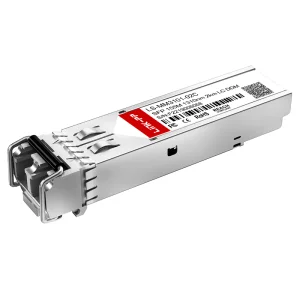
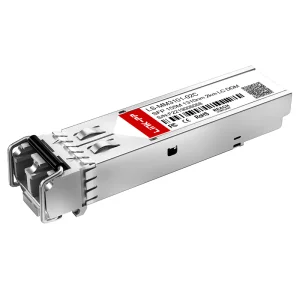
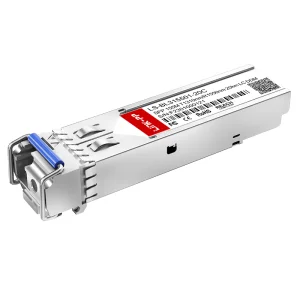
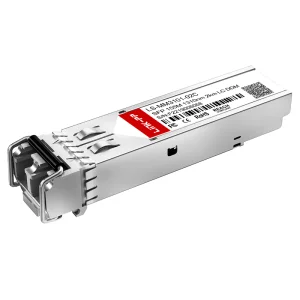
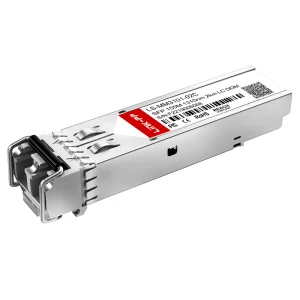
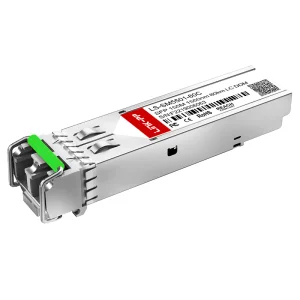
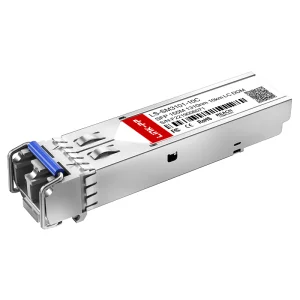
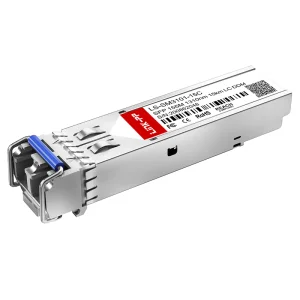
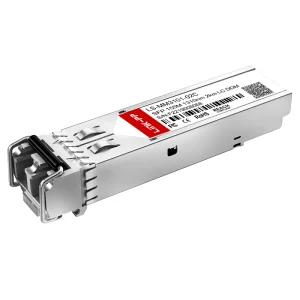
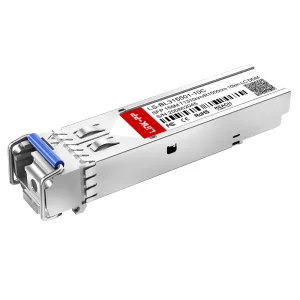
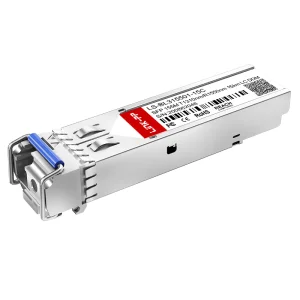
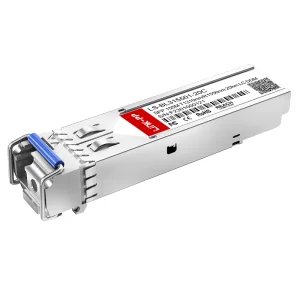
Engineered for seamless integration with leading industrial networks, guaranteeing uninterrupted legacy links under extreme operational conditions.
An In-Depth Technical Analysis of 155M/622M SFP Demands in Brazil's Modernizing Networks
Despite the rapid push toward high-bandwidth networks (10G, 100G, and 800G coherent solutions) driven by FTTH expansions and 5G deployment, Brazil’s industrial and utility sectors maintain a vast base of legacy interfaces. Critical utility operators, including regional giants like CEMIG, Copel, and Eletrobras, alongside industrial operations managed by Vale and offshore platforms operated by Petrobras, still rely heavily on SDH/SONET (STM-1/OC-3 and STM-4/OC-12) systems. These networks transport mission-critical teleprotection signals, SCADA telemetry, and signaling over distances spanning hundreds of kilometers.
The persistence of 155M and 622M SFP modules in Brazil is not merely a matter of legacy latency. Industrial network operators prioritize the deterministic routing, low-latency, and high jitter-resistance that older protocols like SDH provide over newer Ethernet packet networks. The high costs of converting entire remote networks to native IP systems, especially under the regulatory guidelines of ANATEL, have created a massive secondary demand for robust, high-performance legacy form-factor transceivers that comply with modern industrial standards.
In the field of industrial Ethernet and substation communications (governed by standards like IEC 61850), high-speed modules are frequently overkill. Lower bandwidth modules, specifically 155Mbps and 622Mbps transceivers, consume significantly less power and generate far less heat than their 10G or 25G counterparts. In remote installations where power grids are unstable or solar-backed, a difference of 1-2 Watts per transceiver port is critical. LumoWave's custom-engineered 155M/622M SFPs offer optimized power dissipation (<0.8W), helping Brazilian enterprises lower operation temperatures and extend the lifespan of their remote switches.
Modern Production Facility
Dedicated R&D Engineers
Annual Export Volume
Global Supply Chain Partners
Delivering High-Precision Optical Modules Built with Industry-Leading Supply Chain Resilience
Founded in 2016 under the brand LumoWave, LumoWave Optical Technology Co., Ltd. has established itself as an industry leader in optical transceiver manufacturing. With 12 years of core industry expertise and 8 years of global export experience, we specialize in high-speed and legacy optical solutions. Our advanced manufacturing facility features semi-automated SMT lines, high-speed optical coupling stations, and rigorous automated inspection systems that eliminate manufacturing defects.
We leverage a tight-knit ecosystem of over 1,200 upstream and downstream partners. This deep-integration supply chain guarantees immediate component availability for legacy SFP ICs and optoelectronic chips (such as lasers and photodiodes), avoiding the long supply lead times that plague European and American distributors. Whether your Brazilian operation requires duplex LC, simplex (BiDi) LC, or specific wavelength combinations, our manufacturing flexibility ensures timely delivery.
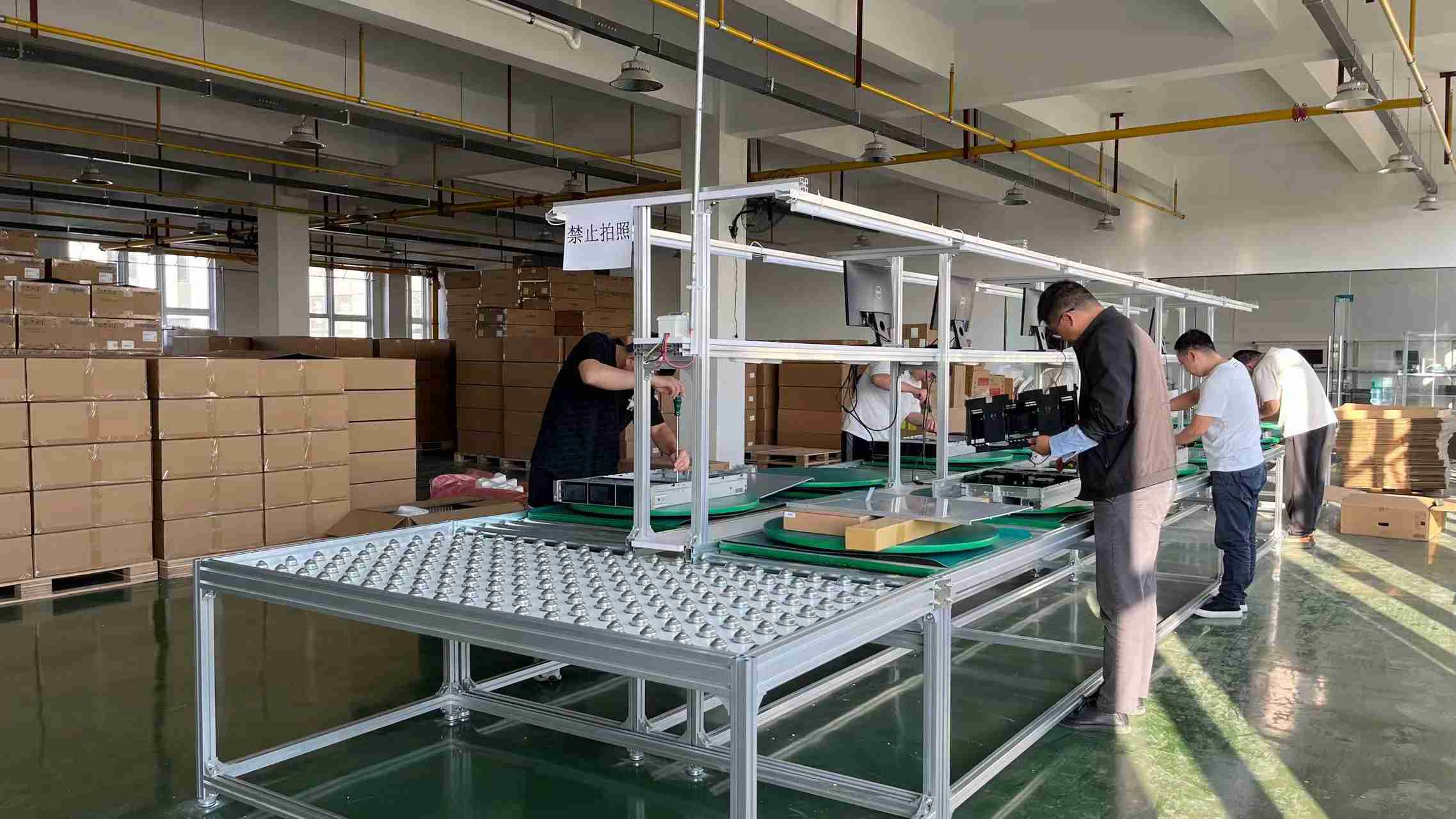



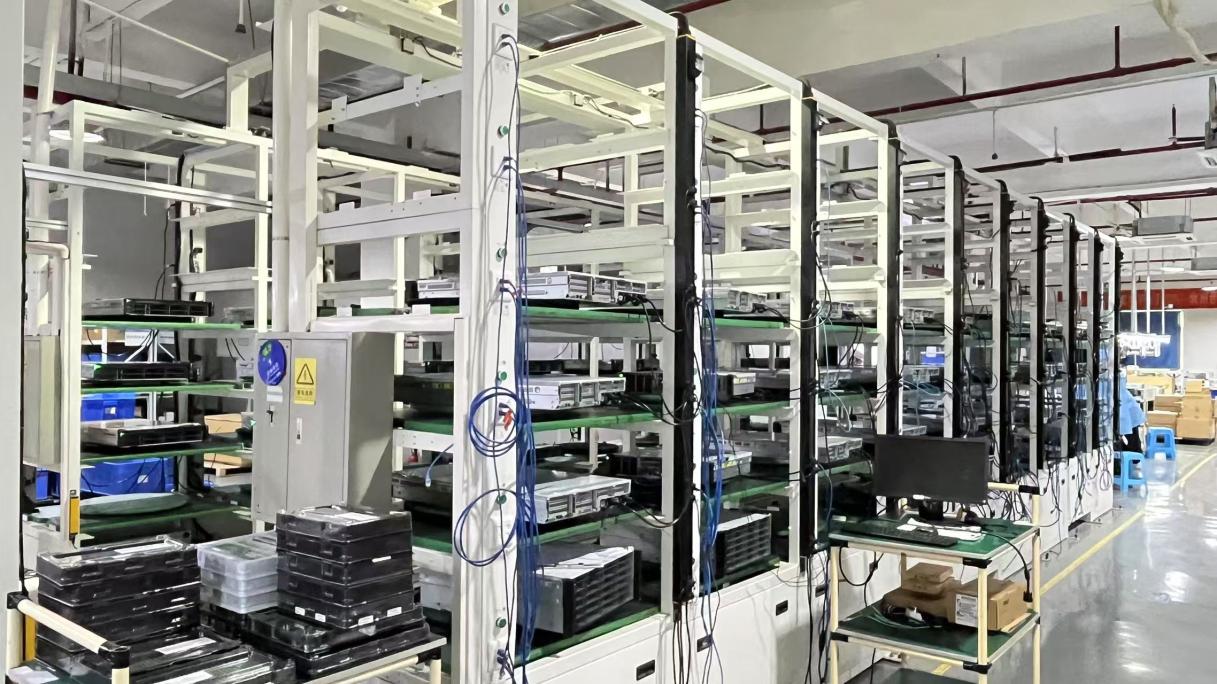

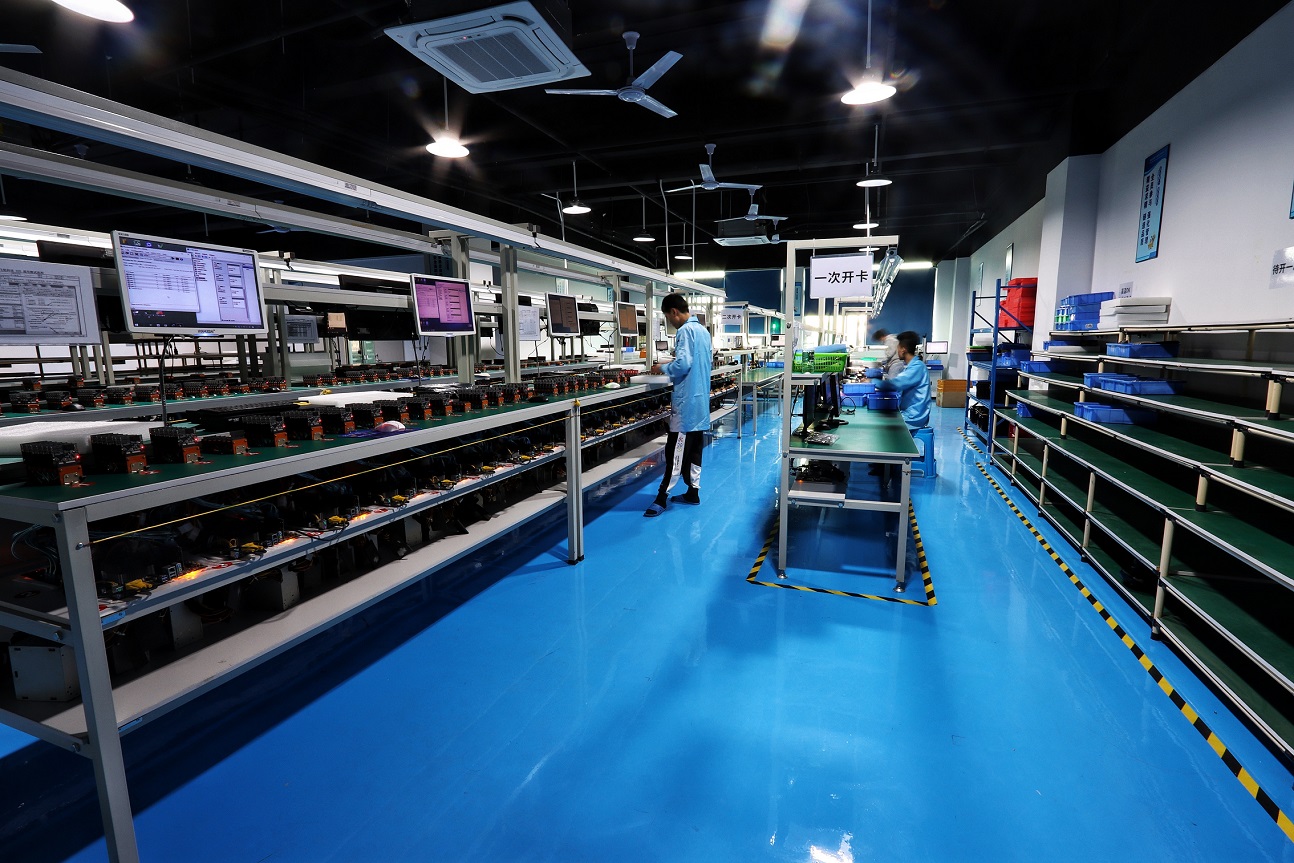
Zero-Tolerance Quality Testing to Defeat Harsh Industrial Environments
Every laser (TOSA), photodetector (ROSA), and transceiver circuit board is individually tested for performance compliance before entering the assembly lines. We use premium suppliers to ensure low failure rates.
During assembly, real-time testing systems calibrate wavelength center alignment, optical extinction ratios, and eye diagrams. This guarantees exceptional signal integrity across long fiber spans.
Finished modules undergo Bit Error Rate (BER) testing, high-temperature environmental aging chambers, and strict compatibility validations on target switch systems (Moxa, Hirschmann, Cisco, etc.).
LumoWave employs 45 dedicated quality control professionals whose sole focus is maintaining zero-defect standards. Every transceiver shipped to Brazil features integrated Digital Diagnostics Monitoring (DDM) capabilities, allowing Brazilian network engineers to remotely monitor optical transmit power, optical receive power, internal module temperature, bias current, and supply voltage levels in real-time, preventing network downtime before it occurs.
How our 155M/622M modules support major infrastructure sectors in Brazil
Industrial networks in Minas Gerais and Paraná require robust Fast Ethernet connections over fiber to resist electromagnetic interference (EMI). Our Hirschmann-compatible 155M optical modules link remote protective relays directly to the central SCADA terminal, guaranteeing high uptime.
Offshore drilling platforms rely on single-mode BiDi SFP transceivers (1310nm/1550nm) to transmit real-time sensor data back to onshore receiving facilities over single-strand fiber lines. This halves the deployment cost of submarine cabling.
Large freight railways transporting iron ore use Moxa-compatible SFPs to connect signaling cabinets over long distances. High-reliability single-mode 80km transceivers ensure signaling lines remain connected through remote, unstaffed regions.
Addressing key technical and logistics questions commonly asked by Brazilian procurement managers
Yes. All of our 155M/622M SFP modules are flashed with custom compatible EEPROM data during testing. We program and test each batch to work seamlessly with Hirschmann M-FAST/SFP-FAST, Moxa SFP-1FEMLC-T, Cisco, Allied Telesis, Huawei, and other major industrial switch brands active in the Brazilian market.
We have extensive experience dealing with Brazilian customs challenges. We provide clear, accurate commercial invoices, detailed packing lists, HS Code alignments, and certificate of origin documentations. This minimizes clearance delay risks at hubs like Viracopos (VCP) and Guarulhos (GRU).
Commercial-grade SFPs operate safely from 0°C to 70°C. Industrial-grade modules (indicated by a "-T" or "-EEC" suffix, such as the Hirschmann and Moxa compatibles) are engineered with high-temperature components and hardened metal housings to withstand temperature extremes from -40°C to 85°C. For Brazilian outdoor automation boxes or unconditioned grid substations, we strongly advise using Industrial-grade SFPs.
Yes. As an established OEM/ODM provider, LumoWave provides custom shell branding, unique private labels, and custom EEPROM coding. We can program custom vendor names and part numbers so the modules integrate smoothly into your internal asset management systems.
Explore our wide range of optical transceivers designed for long-reach transmission, single-strand BiDi, and legacy multi-mode networks in Brazil.
 LumoWave