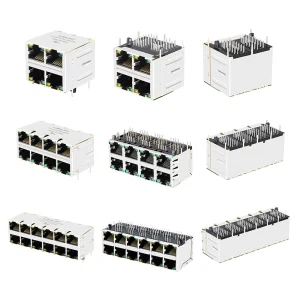
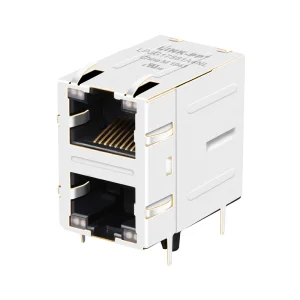
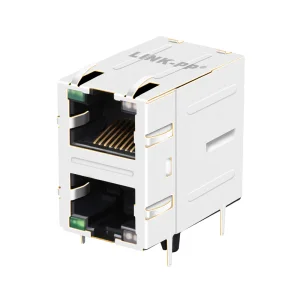
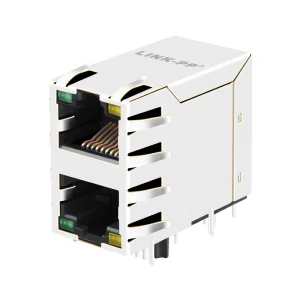
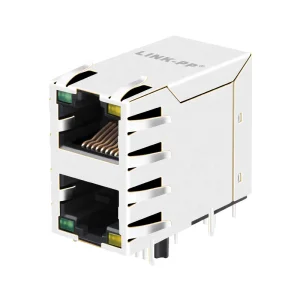
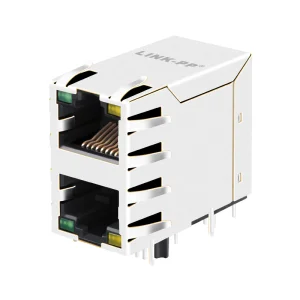
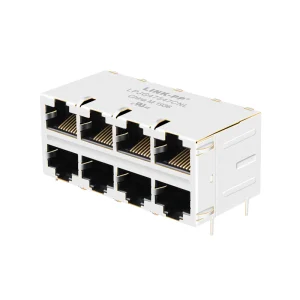
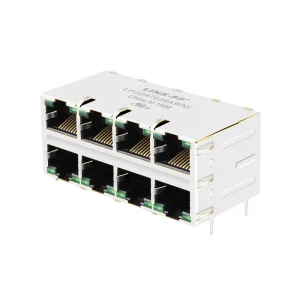
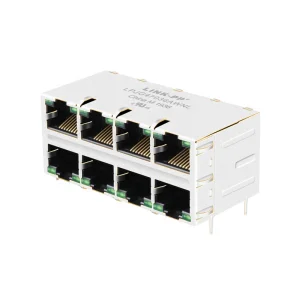
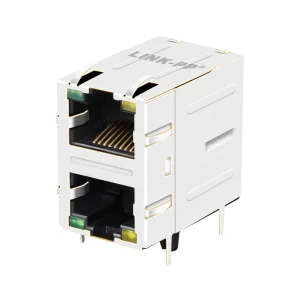
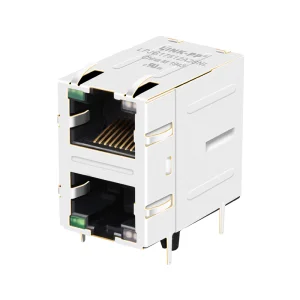
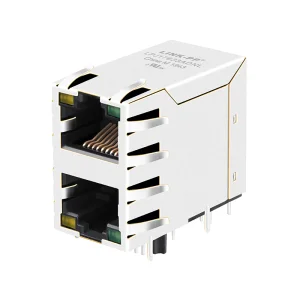
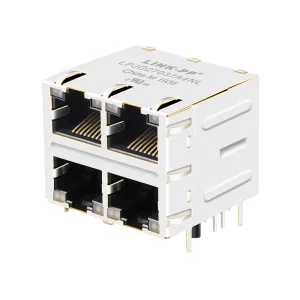
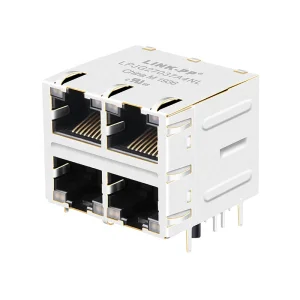
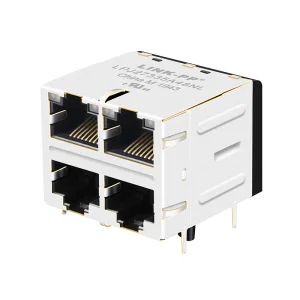
Explore our top-tier catalog of multi-port, low-profile, and integrated magnetic stacked RJ45 female connectors designed for enterprise server, switch, and router deployments.
A technological deep-dive into how stacked designs compress the network layout, maintain signal integrity, and deliver rugged electrical pathways for global systems.
Stacked RJ45 connectors stack ports vertically (e.g., 2x1, 2x2, 2x4, 2x8) to double port density on the network board compared to traditional single-row layouts. This saves precious PCB real estate, crucial for switches and edge computing platforms where space is limited.
By housing isolation transformers, common-mode chokes, resistors, and capacitors directly inside the RJ45 housing, integrated magnetics filter out EMI, protect the physical layer (PHY) chip, and improve signal integrity. This cuts down on assembly time and limits system noise.
Stacked RJ45 setups use wrapped copper or brass shielding with strategic EMI fingers. These fingers establish a secure connection with the chassis panel, neutralizing electro-magnetic interference (EMI) and preventing crosstalk in high-speed copper networks.
The rapid transition to multi-gigabit speeds and increased power delivery is reshaping the physical layout of modern network equipment.
As Wi-Fi 6E, Wi-Fi 7, and next-generation IoT gateways roll out worldwide, traditional 10/100 Mbps and 1G RJ45 interfaces are no longer enough. The industry is moving toward 2.5G, 5G, and 10G Base-T speeds over structured copper wiring (Cat5e, Cat6, Cat6a). However, higher transmission speeds lead to increased high-frequency crosstalk and insertion loss.
To address this, modern stacked RJ45 manufacturers use refined internal winding structures, optimized pin layouts, and enhanced shielding. These upgrades keep Return Loss and Near-End Crosstalk (NEXT) within the strict limits defined by IEEE 802.3 and TIA-568-C.2, ensuring clean signals even at high frequencies.
Powering smart lighting, IP surveillance cameras, and high-performance wireless access points requires cables that can carry both data and substantial power. Standard PoE+ (IEEE 802.3at) and PoE++ (IEEE 802.3bt) transmit up to 90W of DC power over Ethernet pairs. This current generates heat within tightly packed, multi-port connectors. To prevent damage, manufacturers use high-temperature thermoplastic housings (like LCP or PA9T) and contact designs that can handle thermal loads without warping or degrading.
Electromagnetic interference (EMI) is a major issue in crowded datacenters and factories. Stacked RJ45 connectors feature extensive nickel-plated or tin-plated copper alloy shields. Spring-loaded EMI fingers along the connector perimeter ground it directly to the metal bezel. This structure blocks both external interference and internal port-to-port crosstalk, keeping operations stable in noisy environments.
How technical sourcing managers evaluate stacked port connectors to ensure long-term reliability and compliance in various regions.
Global buyers look for connectors that meet international performance standards. Gold plating thickness on contact pins (from flash plating up to 50 micro-inches) is key to preventing oxidation over hundreds of mating cycles. Solderability must comply with J-STD-020 guidelines to ensure standard wave soldering or reflow profiles don't damage the component.
To import into the European Union, North America, and other regulated markets, components must be RoHS and REACH compliant. Connectors should be free from restricted hazardous chemicals and heavy metals. Additionally, plastic components must meet the UL 94 V-0 flammability standard to help contain fires in high-voltage or overheated networking systems.
Procurement teams often look for pin-to-pin, second-source alternatives for industry-standard connectors from major brands like Molex, Pulse Electronics, Amphenol, or Bel Fuse. Using identical footprints and layouts makes it easy to switch manufacturers without needing to redesign the host PCB.
Integrating LumoWave's advanced manufacturing capabilities to build robust, high-precision interconnect solutions.
LumoWave Optical Technology Co., Ltd. is a professional manufacturer specializing in high-speed network interfaces and optical solutions for data centers, telecom operators, and enterprise networking. Under the brand LumoWave, we deliver stable, high-performance, and cost-effective connectivity products.
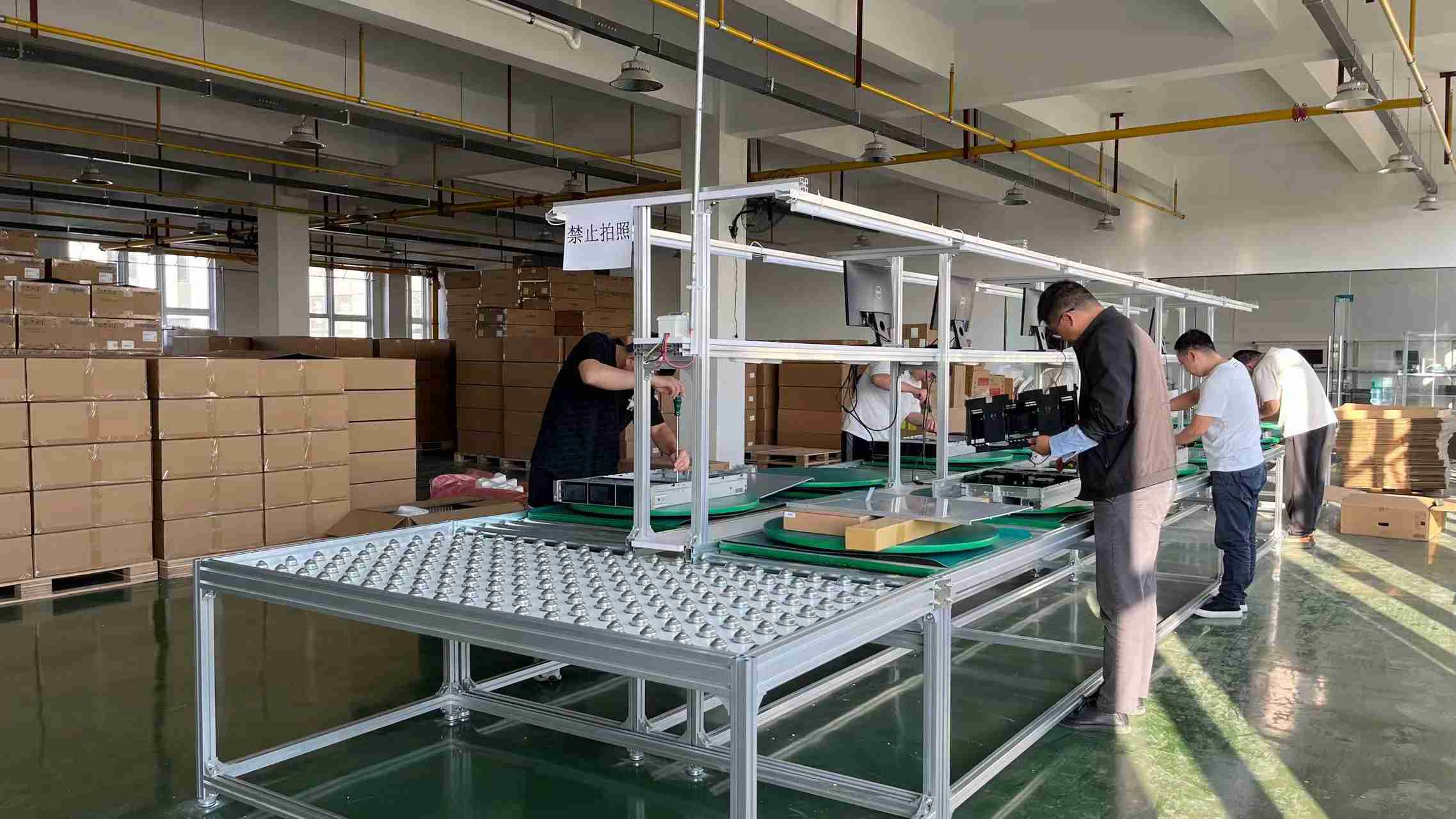
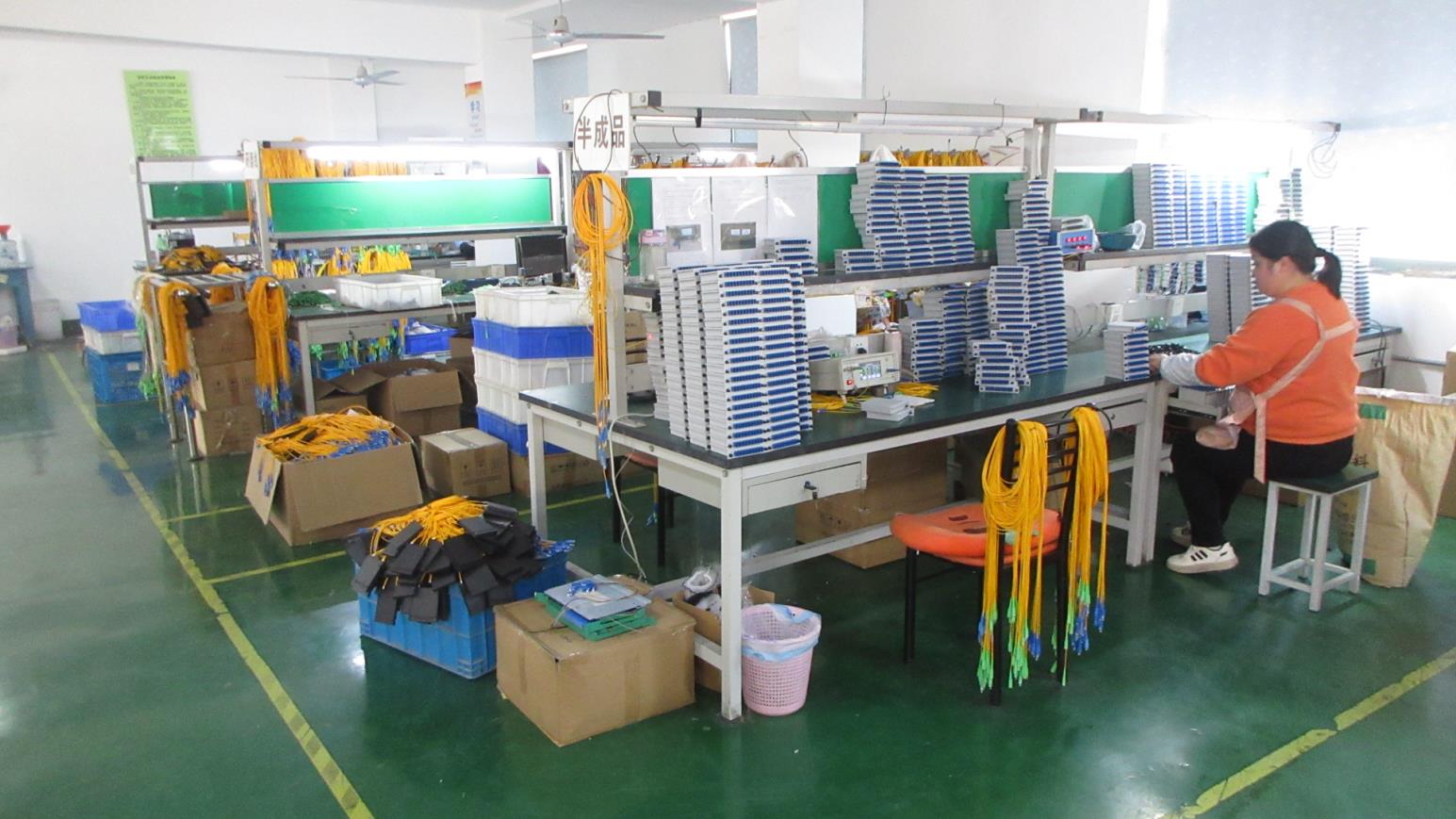
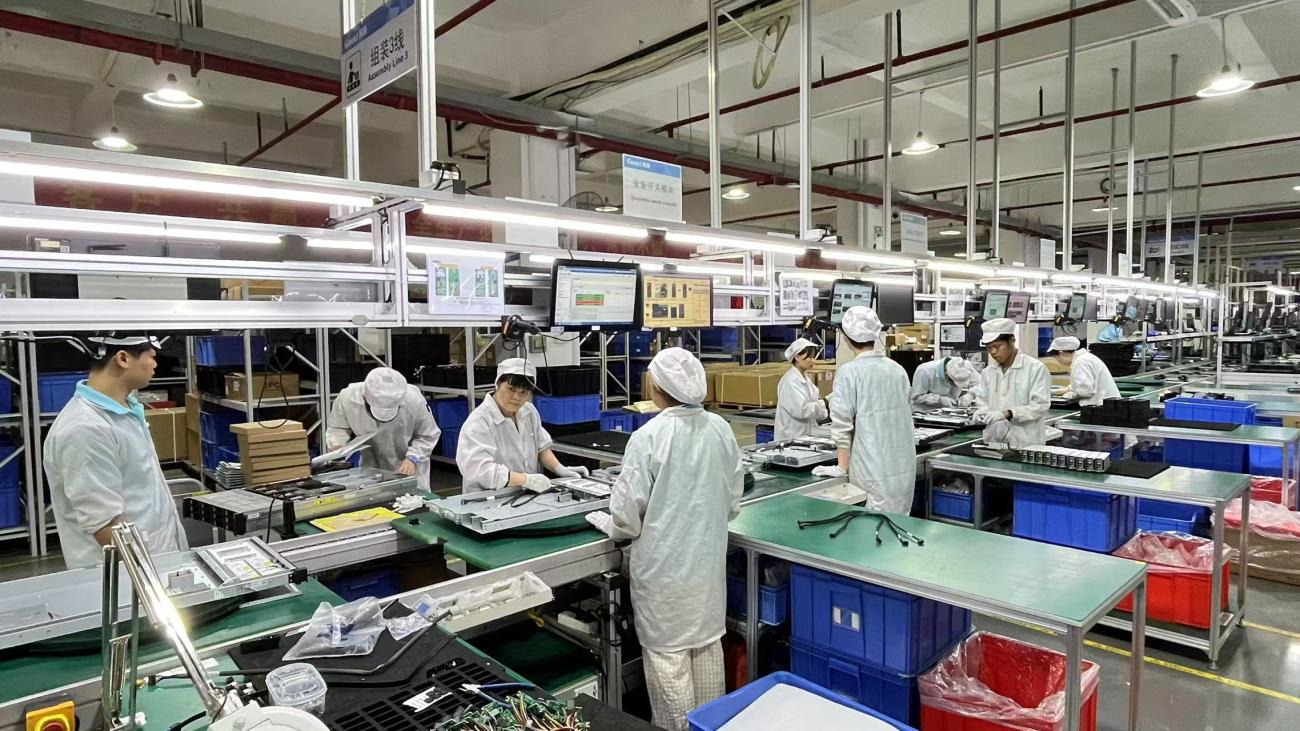
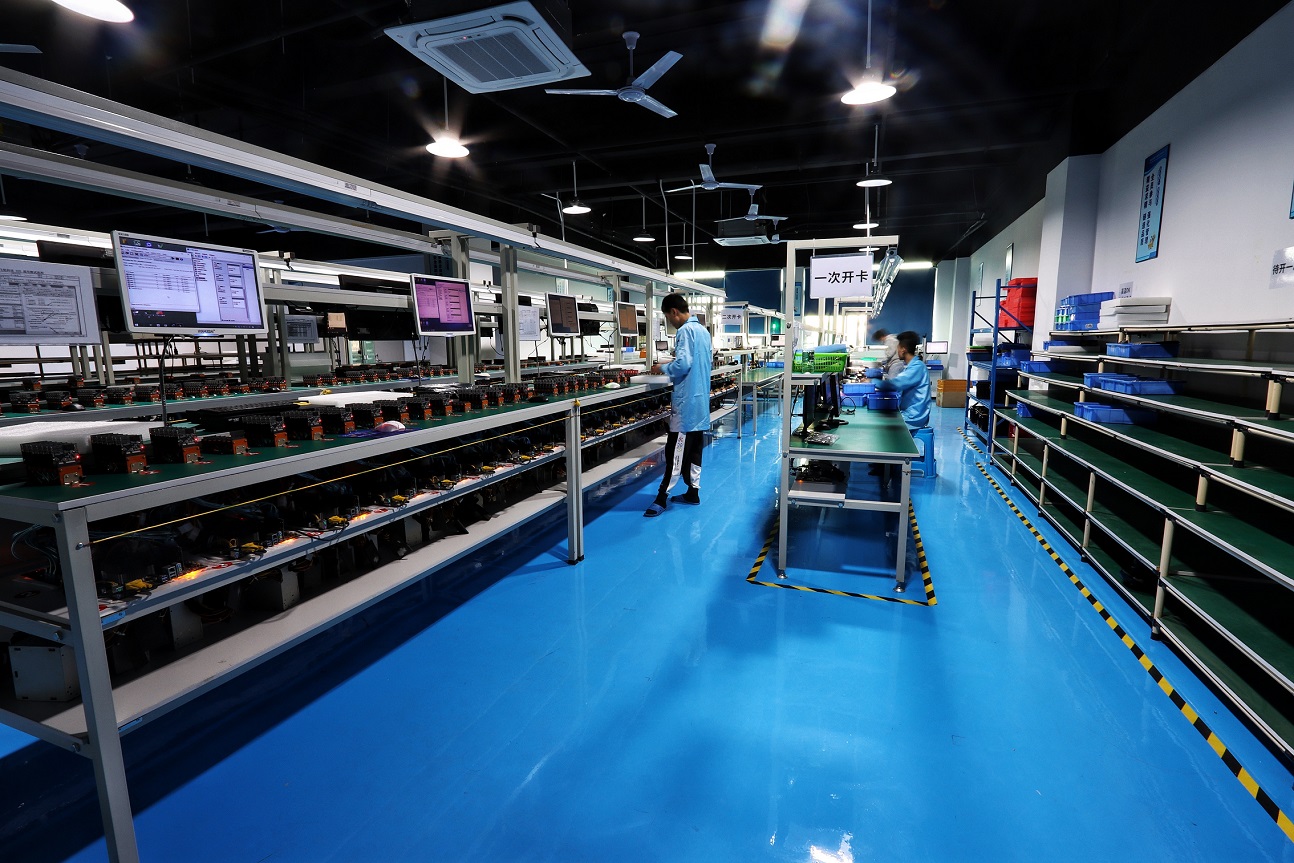
Founded in 2016, LumoWave operates as an OEM/ODM supplier out of a modern production facility covering 320,000㎡. We generate an annual export revenue of around $12 million, supported by 8 years of export experience and 12 years of industry expertise. Our factory leverages automated production and advanced quality control systems to handle large-scale, high-precision connector assembly.
To ensure zero-defect manufacturing, LumoWave runs a strict QA system:
• IQC (Incoming Quality Control): Inspects incoming materials, including raw housing plastics, solder pins, and magnetic toroidal cores.
• IPQC (In-Process Quality Control): Uses automated optical inspection (AOI) to monitor assembly and soldering at key points along the line.
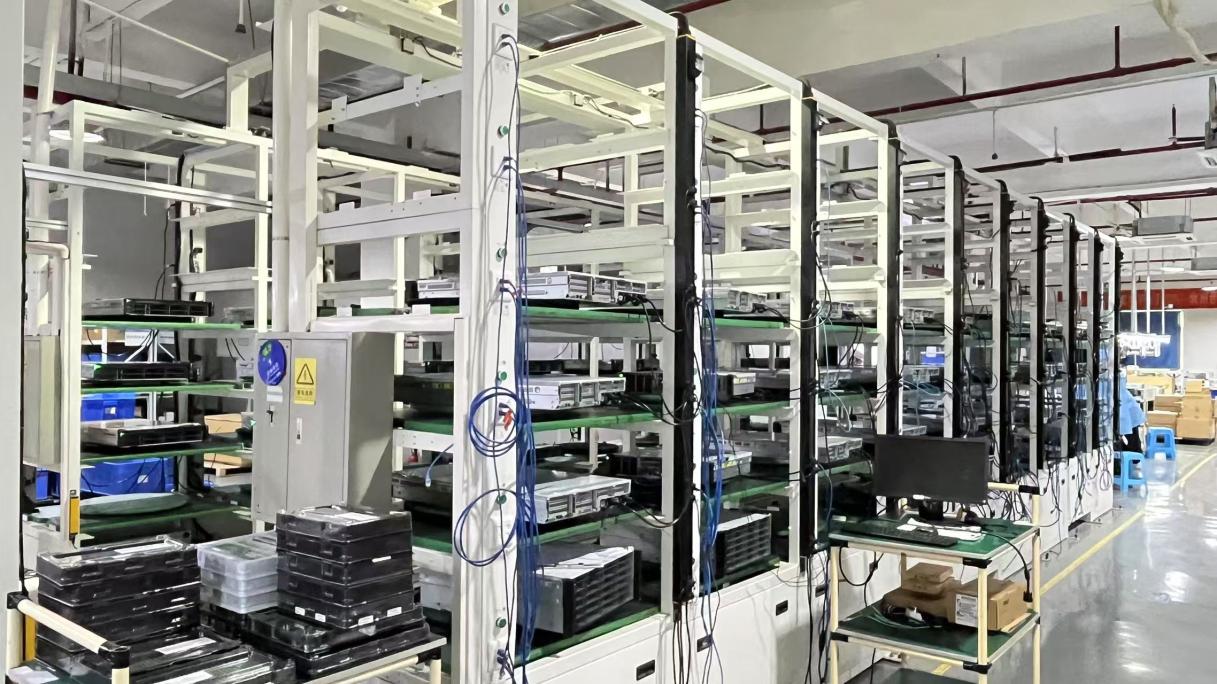
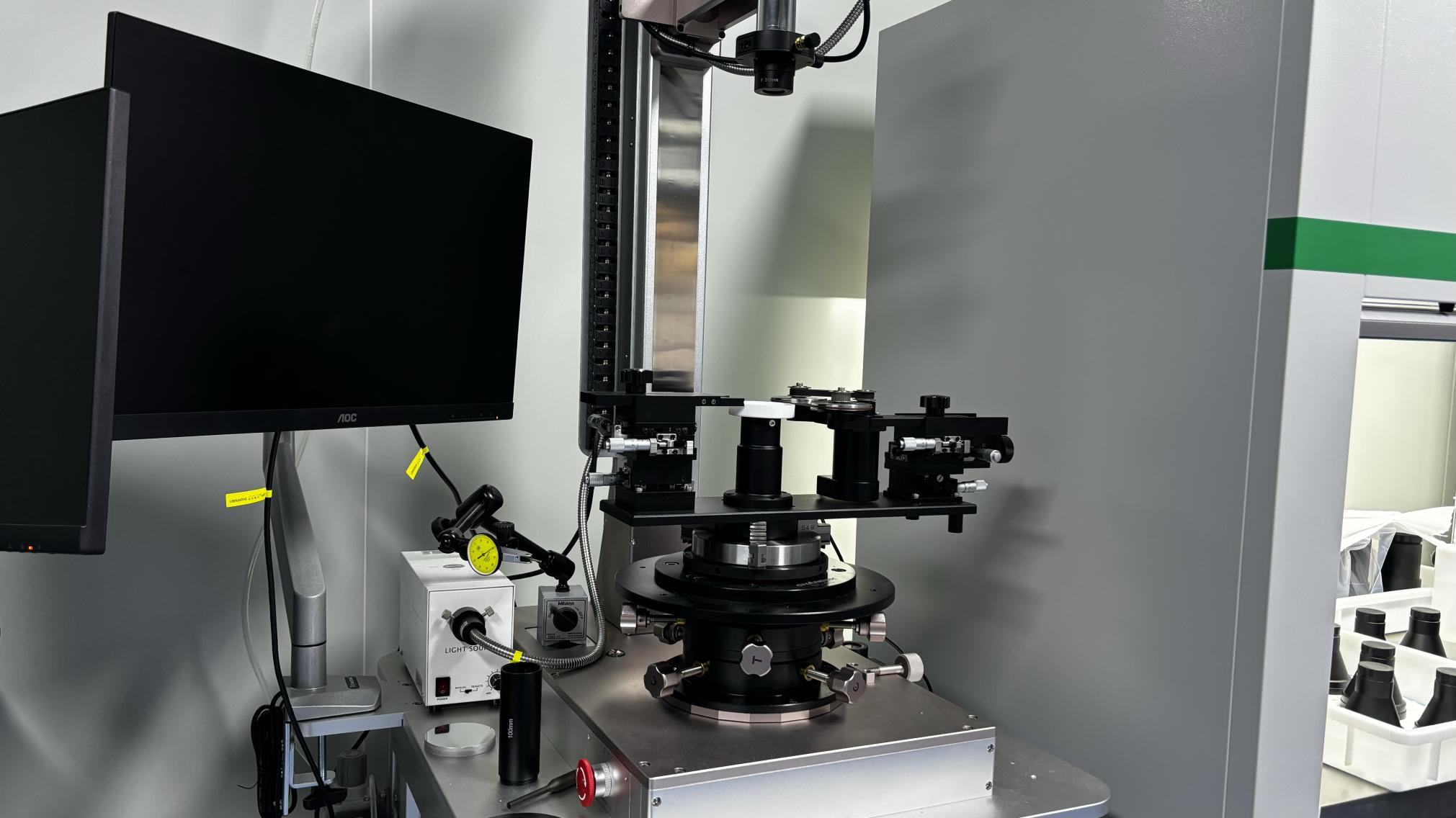
• FQC (Final Product Testing): Subjects finished connectors to rigorous tests, including optical power, BER, wavelength accuracy, temperature cycling, and aging stress tests.
With 45 dedicated quality control personnel, we keep our manufacturing compliant with international standards.
LumoWave's R&D department features 85 experienced engineers. Last year, the team released approximately 120 new designs focused on high-speed transmission and energy efficiency. We provide deep ODM/OEM customization, including custom pin assignments, LED colors, and private labeling. With a partner network of over 1,200 suppliers, LumoWave offers a highly flexible and resilient supply chain.
Compare electrical, mechanical, and physical parameters to choose the right stacked RJ45 female connector configuration for your project.
| Parameter Category | Specification Target | Technical Implications & Performance Indicators |
|---|---|---|
| Port Configuration Options | 2x1, 2x2, 2x4, 2x6, 2x8 Ports | Defines board density. Multiple stacked options allow configurations up to 16 ports per unit. |
| Supported Data Speed Rates | 10/100M, 1G, 2.5G, 5G, 10G Base-T | Ensures backward and forward compatibility with Cat5e, Cat6, and Cat6a network standards. |
| Integrated Transformer Magnetics | With or Without Integrated Magnetics (MagJack) | Suppresses common-mode noise, offers 1500VAC isolation, and protects delicate PHY transceiver silicon. |
| PoE Power Handling Level | Non-PoE, PoE (15W), PoE+ (30W), PoE++ (90W) | Varies based on pin designs and wire gauges (AWG) used to handle current without overheating. |
| Gold Plating Thickness | Flash, 1.5u", 6u", 15u", 30u", 50u" | Determines corrosion resistance and electrical conductivity. 50u" is recommended for telecom grade. |
| LED Indicators | Green, Yellow, Orange, Bi-color customization | Shows link state and activity directly. Integrated resistors simplify external layout routing. |
| Shielding Shell & EMI Fingers | Nickel/Tin plated Copper Alloy + Top/Side Fingers | Provides multi-point grounding to the chassis panel, preventing electromagnetic noise leakage. |
Answers to common technical, manufacturing, and sourcing questions about stacked RJ45 female connectors.
A stacked RJ45 connector places ports on top of each other (like a 2x4 layout). This configuration cuts the required PCB edge space in half compared to a single-row (1x8) design, allowing engineers to pack more Ethernet ports into switches, routers, and industrial controllers.
Integrated magnetics contain small isolation transformers and chokes that filter out electromagnetic noise (EMI). They also provide up to 1500V AC isolation to protect delicate silicon PHY chips on the board from static discharges, power surges, and ground loops.
For telecom, server, and enterprise switch setups, 30μ" or 50μ" gold plating is highly recommended. Thicker gold plating prevents contact wear and corrosion over repeated mating cycles, ensuring reliable data connections in demanding environments.
Yes, our PoE-enabled connectors are built to handle PoE++ (up to 90W) safely. They feature high-temperature LCP housings and thicker copper alloy terminals that dissipate heat efficiently, preventing port damage under heavy electrical loads.
Yes. Through our OEM/ODM services, LumoWave provides custom LED configurations (such as green/yellow or bi-color), specialized shielding, and custom winding setups to match the pin layout of your specific physical layer (PHY) transceiver.
We use automated optical inspection (AOI) during assembly, followed by automated testing for voltage breakdown, insertion loss, and crosstalk. Our plant uses wave and reflow soldering setups that comply with IPC-A-610 standards, keeping solder joints strong and reliable.
Yes, our stacked and single-port connectors are designed to match standard mechanical footprints from brands like Molex, Pulse, and Amphenol. This allows you to use them as second-source components without redesigning your PCB.
All our connectors comply with CE, RoHS, and REACH directives. The plastic housings are built from UL 94 V-0 flame-retardant material, ensuring safety and compliance for global shipping.
Compare standard, low-profile, and specialized PoE configurations in our multi-port RJ45 catalog to fit your system's layout.
A look inside LumoWave's precision production lines, testing laboratories, cleanrooms, and automated packaging systems.

 LumoWave